Introduction
The Domain Name System (DNS) is a critical component of the internet, responsible for translating human-readable domain names into machine-readable IP addresses. DNS records are the building blocks of this system, each serving a specific purpose in directing internet traffic. In this article, we will explore the most common DNS record types, their functions, and how they contribute to the overall operation of the DNS.
Common DNS Record Types
A Record (Address Record)
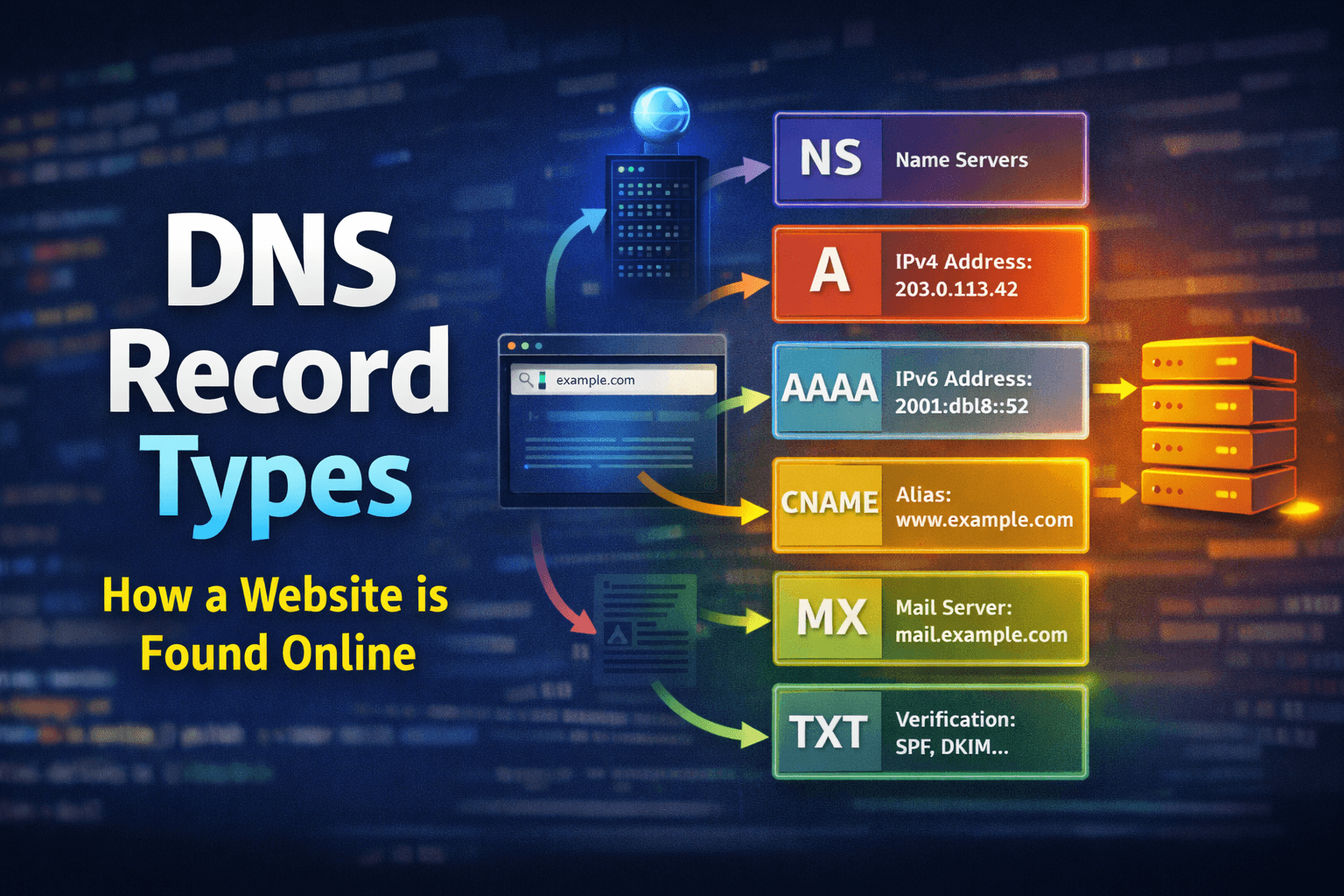
An A record maps a domain name to an IPv4 address. It is one of the most fundamental DNS records, allowing users to access websites using domain names instead of numerical IP addresses.
AAAA Record (IPv6 Address Record)
An AAAA record is similar to an A record but maps a domain name to an IPv6 address. As the internet transitions to IPv6, AAAA records are becoming increasingly important.
CNAME Record (Canonical Name Record)
A CNAME record creates an alias for a domain name, pointing it to another domain name. This is useful for redirecting multiple subdomains to a single domain without needing separate A or AAAA records.
MX Record (Mail Exchange Record)
An MX record specifies the mail servers responsible for receiving email on behalf of a domain. It includes a priority value to determine the order in which mail servers should be used.
TXT Record (Text Record)
A TXT record allows domain owners to store arbitrary text data in the DNS. It is commonly used for verification purposes, such as SPF (Sender Policy Framework) records for email authentication.
NS Record (Name Server Record)
An NS record indicates the authoritative name servers for a domain. These servers are responsible for handling DNS queries for that domain.
SOA Record (Start of Authority Record)
An SOA record provides essential information about a DNS zone, including the primary name server, the administrator's email address, and various timing parameters for zone transfers and caching.
Conclusion
DNS records are essential for the proper functioning of the internet, enabling domain names to be resolved into IP addresses and facilitating various services like email delivery. Understanding the different types of DNS records and their purposes is crucial for anyone involved in web development, networking, or IT administration.
Further Reading
Happy learning!