Introduction
In today's interconnected world, understanding the devices that make up a computer network is essential for anyone involved in technology. From accessing the internet at home to managing complex enterprise systems, various network devices play crucial roles in ensuring smooth communication and data transfer. In this article, we will explore some of the most common network devices, their functions, and how they work together to create efficient and secure networks.
What is a Modem?
A modem, short for "modulator-demodulator," is a device that connects your local network to the internet. It converts digital data from your computer into analog signals that can be transmitted over telephone lines, cable systems, or fiber optics, and vice versa. Essentially, the modem acts as a bridge between your home or office network and your Internet Service Provider (ISP), enabling internet access.
What is a Router?
A router is a device that directs data traffic between different networks. It connects your local network (such as your home or office) to the internet and manages the flow of data packets to ensure they reach their intended destinations. Routers use IP addresses to determine where to send data, making them essential for efficient communication within and outside the network. Additionally, routers often include features like Network Address Translation (NAT) and built-in firewalls for added security.
Switch vs Hub: How Local Networks Work
Both switches and hubs are devices used to connect multiple devices within a local area network (LAN). A hub is a basic networking device that broadcasts incoming data packets to all connected devices, regardless of the intended recipient. This can lead to network congestion and security vulnerabilities, as all devices receive all data. In contrast, a switch is a more advanced device that intelligently directs data packets only to the specific device they are intended for. This targeted approach reduces network traffic and improves overall performance, making switches the preferred choice for modern networks.
What is a Firewall?
A firewall is a security device that monitors and controls incoming and outgoing network traffic based on predetermined security rules. It acts as a barrier between a trusted internal network and untrusted external networks, such as the internet. Firewalls can be hardware-based, software-based, or a combination of both. They help protect networks from unauthorized access, cyberattacks, and other security threats by filtering traffic and blocking potentially harmful data.
What is a Load Balancer?
A load balancer is a device that distributes incoming network traffic across multiple servers to ensure no single server becomes overwhelmed. By balancing the load, it helps improve the performance, reliability, and scalability of applications and services. Load balancers can operate at various layers of the OSI model, using different algorithms to determine how to distribute traffic effectively. They are commonly used in web applications to handle high volumes of user requests and ensure continuous availability.
How These Devices Work Together
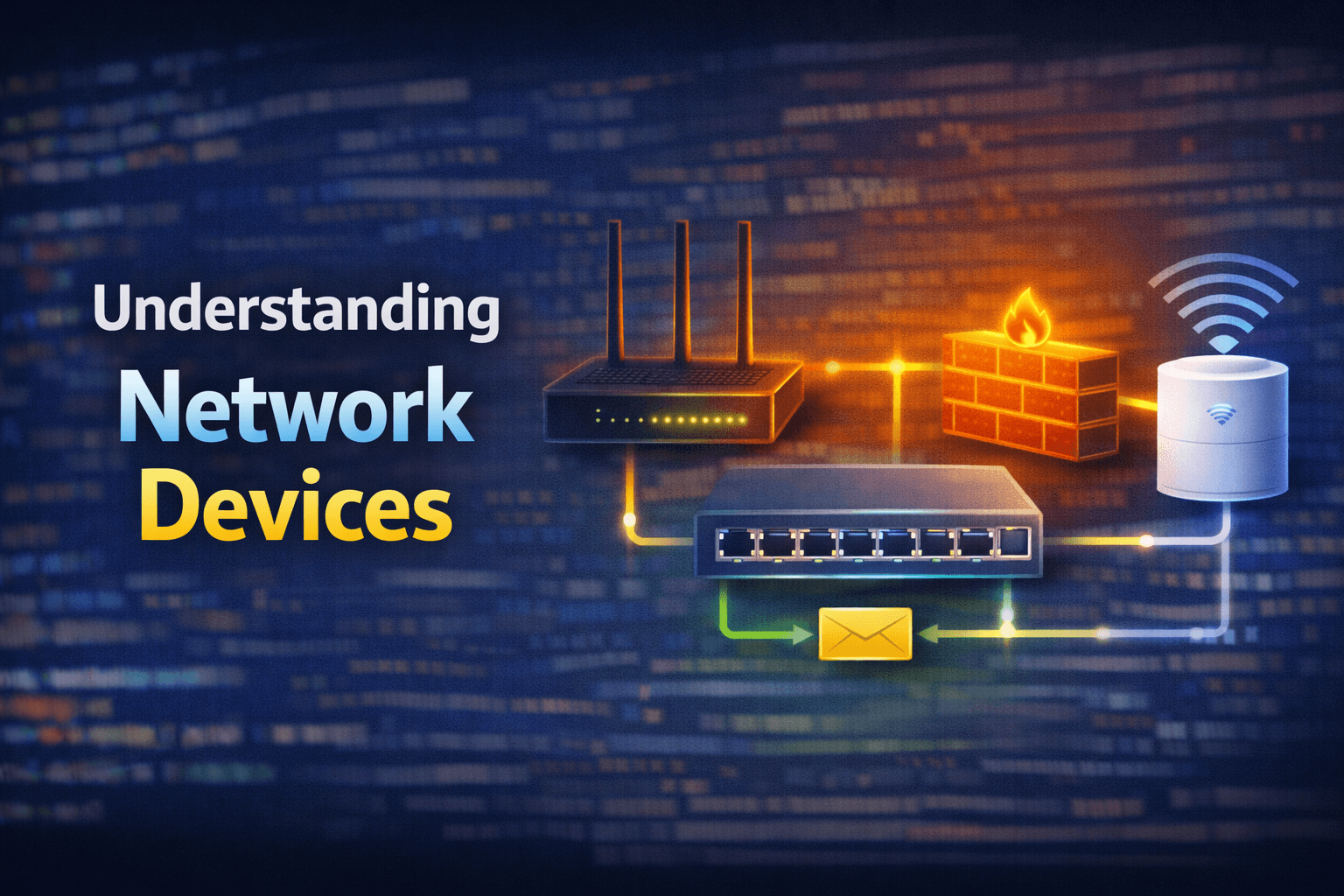
In a typical network setup, these devices work in harmony to provide seamless connectivity and security. For example, when you access a website from your computer, the request first goes through the modem to connect to the internet. The router then directs the request to the appropriate server while managing local traffic. If the network includes multiple devices, a switch ensures that data is sent only to the intended recipient. Meanwhile, a firewall monitors the traffic for potential threats, and if the website experiences high traffic, a load balancer distributes requests across multiple servers to maintain performance.
Conclusion
Understanding the roles and functions of various network devices is crucial for building and maintaining efficient and secure networks. From modems and routers to switches, firewalls, and load balancers, each device plays a specific role in ensuring smooth communication and data transfer. By grasping these concepts, software engineers and IT professionals can better design, implement, and manage networks that meet the demands of today's digital world.
Further Reading
- Networking Basics: What You Need to Know
- How Does a Router Work?
- Switch vs Hub: What's the Difference?
- Understanding Firewalls
- Load Balancing Explained
Happy learning!